Last year we wrote a blog called Why Women Shed Fat Differently: Understanding Hormones, Nutrition, and Fat Loss.
Today we are expanding on that conversation.
Because in the time since that post, we have heard the same sentence again and again from women walking through our doors:
“I feel like I’m doing the right things… but my body feels different now.”
They are wondering, and you might be too:
Why energy is lower.
Why sleep feels lighter.
Why the belly weight appeared “out of nowhere.”
Why motivation feels harder to summon.
Why things that used to work simply do not anymore.
And perhaps most importantly, why so many of these changes are normalized as “just part of getting older,” when in reality they are often red flags that the body needs support, not simply to work harder.
Let’s talk about what is actually happening during perimenopause and menopause, how it affects fat loss, and what research and real world coaching experience suggest can help.
Not perfection.
Not restriction.
Support.
The Hormonal Transition No One Prepared You For
Perimenopause can begin in the late 30s or early 40s. Estrogen and progesterone begin to fluctuate long before periods stop. This volatility is what drives many of the early symptoms: disrupted sleep, mood swings, increased cravings, irregular cycles, and sudden changes in body composition.
As estrogen gradually declines, several physiological shifts occur:
- Insulin sensitivity decreases
- Muscle protein synthesis becomes less efficient
- Fat storage shifts toward the abdomen
- Resting metabolic rate slightly declines
- Cortisol becomes more influential
None of these changes mean fat loss is impossible. They simply mean the strategy needs to change.
One of estrogen’s roles is helping regulate glucose uptake and fat metabolism. When levels drop, the body becomes slightly less efficient at handling carbohydrates. Blood sugar rises faster, insulin stays elevated longer, and fat storage becomes easier to trigger. This is one reason many women notice increased cravings and belly fat during midlife, even without eating more food.
Add disrupted sleep to the mix, and hunger hormones like ghrelin increase while satiety hormones like leptin decrease.
The result is a body that feels hungrier, more tired, and more resistant to change.
This is not a lack of willpower … still something that we truly only have so much of.
But physiology.
While it may seem like the cards are stacked against you, your goals are very much still possible!
Muscle Becomes Your Metabolic Anchor
One of the most important protective factors during menopause is lean muscle mass.
After age 40, women naturally lose approximately 0.5 to 1 percent of muscle per year if no resistance training is present. This process accelerates after menopause. Less muscle means fewer calories burned at rest, lower blood sugar control, reduced balance, and greater injury risk.
The encouraging part is this:
Postmenopausal women respond extremely well to strength training. Research consistently shows that resistance training restores muscle protein synthesis, improves insulin sensitivity, increases bone density, and improves functional capacity well into the 60s, 70s, and beyond.
Our last blog is all about strength training, check it out: Heavy Weight Training, What It Actually Means and Why Your Body Needs It
In other words, your body is still highly trainable.
It just needs the right signal.
That signal is progressive resistance training paired with adequate protein intake.
Why Dieting Harder Often Backfires in Midlife
Many women respond to midlife weight changes by eating less and moving more. Unfortunately, aggressive calorie restriction without strength training tends to accelerate muscle loss, not fat loss.
Lower calories plus lower estrogen plus lower muscle mass is a perfect storm for a slowing metabolism.
This is why the “eat less, do more cardio” approach that may have worked in your 30s feels punishing and ineffective in your 50s.
Midlife fat loss works best when the priorities are:
- Preserve and build muscle
- Keep blood sugar stable
- Manage stress load
- Support sleep
- Create moderate calorie awareness, not severe restriction
Fat loss still requires a calorie deficit. The rule has not changed.
But how we create that deficit must evolve.
Nutrition That Supports Hormonal Shifts
Rather than extreme diets, research supports a pattern that focuses on these KEY FACTORS:
- Higher protein intake to preserve muscle
- High fiber carbohydrates to stabilize blood sugar
- Adequate dietary fats to support hormone production
- Micronutrient sufficiency for thyroid and nervous system health
Protein becomes especially important.
Aging muscle becomes less sensitive to protein signals, meaning slightly higher per-meal protein doses are needed to stimulate muscle repair. Roughly 25 to 40 grams per meal is a useful target for most women in midlife.
Fiber intake is equally critical. Gut bacteria influence estrogen metabolism, inflammation, and insulin sensitivity. Diets low in fiber and high in processed foods disrupt this system.
This is one reason the Standard American Diet is increasingly linked to metabolic dysfunction, gut issues, and chronic inflammation.
Carbohydrates are not the enemy. Poorly chosen carbohydrates are. Whole grains, fruits, legumes, and vegetables provide glycogen for training and fiber for gut health. Sadly, ultra processed sugars and refined starches do the opposite.
Stress, Cortisol, and the Midlife Load
By midlife, many women carry significant invisible loads.
Things like: careers, aging parents, teenagers, partnerships, financial planning, and their own health concerns.
Chronic stress elevates cortisol. Cortisol increases blood sugar, promotes abdominal fat storage, disrupts sleep, and increases emotional eating. This loop is one of the biggest hidden drivers of midlife body composition change.
Movement helps.
Strength training helps.
Breathing practices help.
Community helps.
Which is exactly why group-based training environments often succeed where solo efforts stall. Humans regulate stress better together.
Not to mention everything we could dive into about social circles and habits.
Important Note Before You Implement Changes
Everything shared here reflects current research and coaching experience. It is educational, not medical advice.
Hormone replacement therapy, thyroid management, metabolic conditions, and menopausal symptom management are medical decisions. Always consult a qualified, trusted provider such as an OB-GYN, Certified Nurse Midwife, or Women’s Health Nurse Practitioner when addressing hormone-related concerns.
Fitness and nutrition are powerful tools.
They work best alongside appropriate medical care.
So What Can You Do?
Start strength training at least two to three days per week. Focus on full body training with progressive challenge.
Eat sufficient protein at each meal. Aim for roughly a palm-sized portion or 25 to 40 grams.
Build meals around whole food carbohydrates and vegetables rather than eliminating carbs completely.
Support sleep with consistent routines, reduced evening screen exposure, and adequate daytime movement.
Reduce stress where possible and build recovery practices into your week.
Consistency matters more than perfection.
Find a program you enjoy enough to repeat.
We work with women across every stage of this transition.
The mom rebuilding confidence.
The woman navigating perimenopause.
The retiree regaining strength.
The active woman who never lifted before.
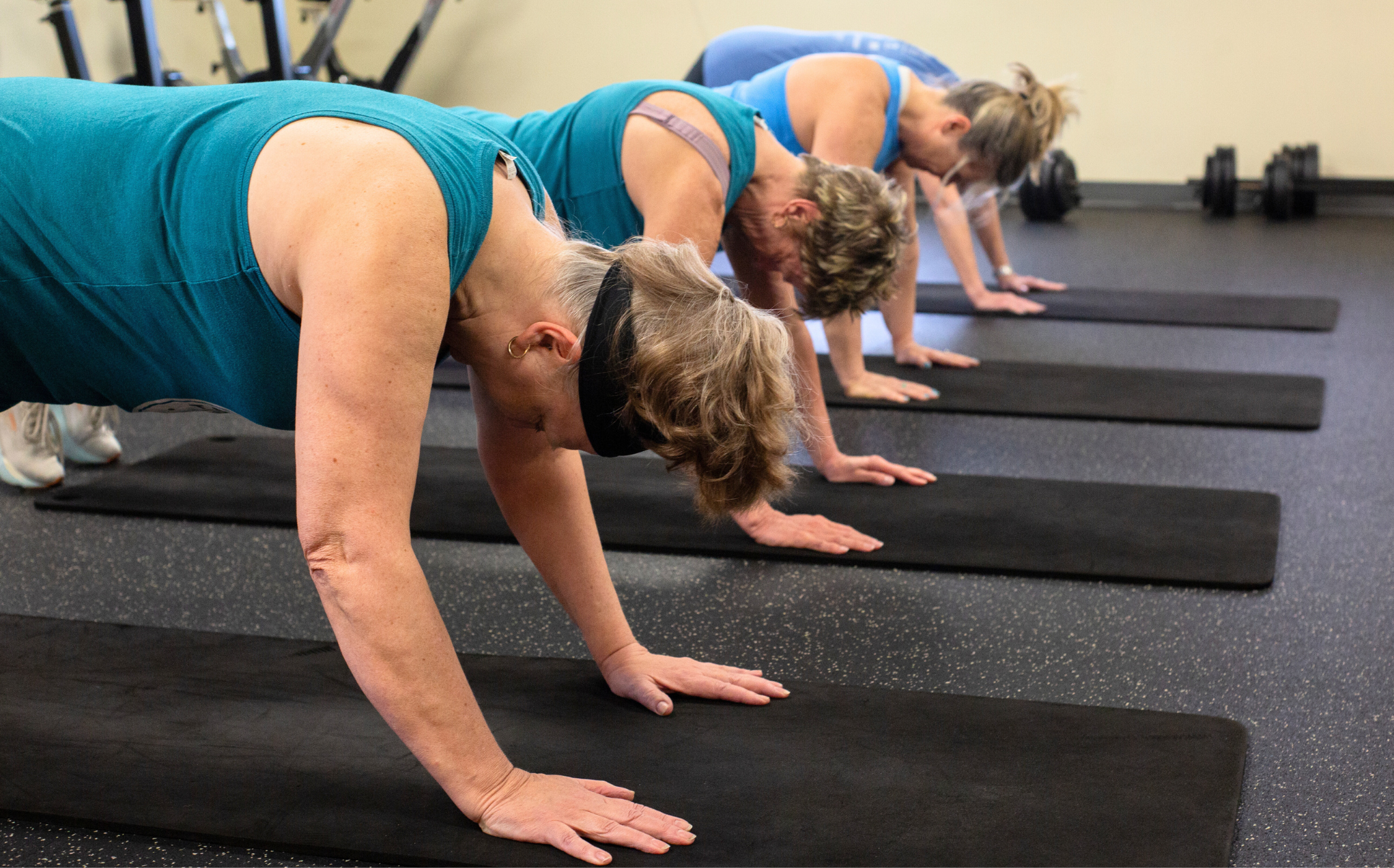
Our Sweat Fit, Fit Over 50, and Killer Kurves programs all center around progressive strength training, balanced nutrition guidance, and a community that makes showing up feel safe, not intimidating.
Not extreme.
Not punishing.
Repeatable.
Because the goal is not just fat loss.
It is building a body that carries you confidently through the next decades of your life.
And you deserve that.
Recent Comments