Have you entered your 40s or 50s and found yourself wondering why your body suddenly seems to be playing by different rules?
Maybe your joints feel stiffer. Your shoulder started hurting without an obvious injury. A tendon that never bothered you before suddenly feels irritated. You don’t recover from workouts quite as quickly. Or maintaining the strength you’ve always had seems to require a little more effort.
There may actually be a reason your body feels different.
The hormonal changes that occur during perimenopause and menopause can influence the musculoskeletal system, including our muscles, bones, tendons, ligaments, cartilage and joints.
But there’s an equally important part of this conversation that I want women to understand:
Menopause may change your capacity. It doesn’t take away your capacity to adapt.
The emerging “musculoskeletal syndrome of menopause”
In 2024, researchers writing in Climacteric proposed the term musculoskeletal syndrome of menopause to describe a collection of musculoskeletal changes and symptoms that may occur as estrogen fluctuates and ultimately declines through the menopausal transition.
These can include joint and muscle pain, loss of muscle mass and strength, loss of bone density, tendon and ligament problems, adhesive capsulitis (frozen shoulder), and changes associated with osteoarthritis.
Estrogen receptors are found throughout musculoskeletal tissues, and changing estrogen levels may influence inflammation, bone remodeling, muscle function and connective tissue health.
Other research supports the observation that musculoskeletal symptoms become more common during this stage of life. A recent systematic review and meta-analysis involving more than 93,000 women found muscle or joint pain in approximately 40% of premenopausal women compared with 57% of perimenopausal and 59% of postmenopausal women.
Does that mean every sore knee, painful shoulder or irritated Achilles tendon in a 50-year-old woman is because of menopause?
Absolutely not.
Pain and injury are complex. Activity and training load, previous injury, strength, sleep, stress, nutrition, genetics and other health conditions can all contribute.
But hormonal health may be another important piece of the puzzle that we haven’t always considered.
Think capacity, not fragility
This distinction is important.
Learning that declining estrogen can affect muscles, tendons, joints and bones could easily leave women with the message that their bodies are becoming more fragile and therefore they should be more careful or do less.
That’s not the message I want women to take from this research.
Instead, I want you to think about capacity.
Your body has a certain capacity to tolerate the demands you place upon it. Those demands might include strength training, running, pickleball, gardening, carrying groceries or simply navigating a busy life.
During the menopause transition, the biological environment supporting recovery and adaptation may change.
Something your body previously handled easily may occasionally exceed its current capacity.
That doesn’t necessarily mean the activity is harmful, and it certainly doesn’t mean you need to stop challenging your body.
It may simply mean the relationship between what you’re asking your body to do and what it’s currently prepared to tolerate needs some attention.
And the really important part?
Capacity can be built.
Loading becomes more important, not less
When something hurts, our natural reaction is often to protect it. Temporarily reducing or modifying an irritating activity can absolutely be appropriate. But long-term avoidance isn’t how we build stronger muscles, bones or tendons.
We build capacity by giving the body an appropriate stimulus and allowing it to adapt.
That’s one reason resistance training becomes so important during midlife.
Current menopause recommendations encourage regular exercise for muscle and bone health, including resistance exercise at least twice per week along with aerobic physical activity.
Your muscles need a reason to remain strong. Your bones need loading. Your tendons need progressive resistance.
That doesn’t mean ignoring symptoms or pushing through everything.
It means meeting your body where it is today and progressively building from there.
Support the environment in which adaptation happens
Exercise is incredibly powerful, but your hour in the gym doesn’t exist independently from the other 23 hours of your day.
Your body still has to recover from and adapt to the load you give it.
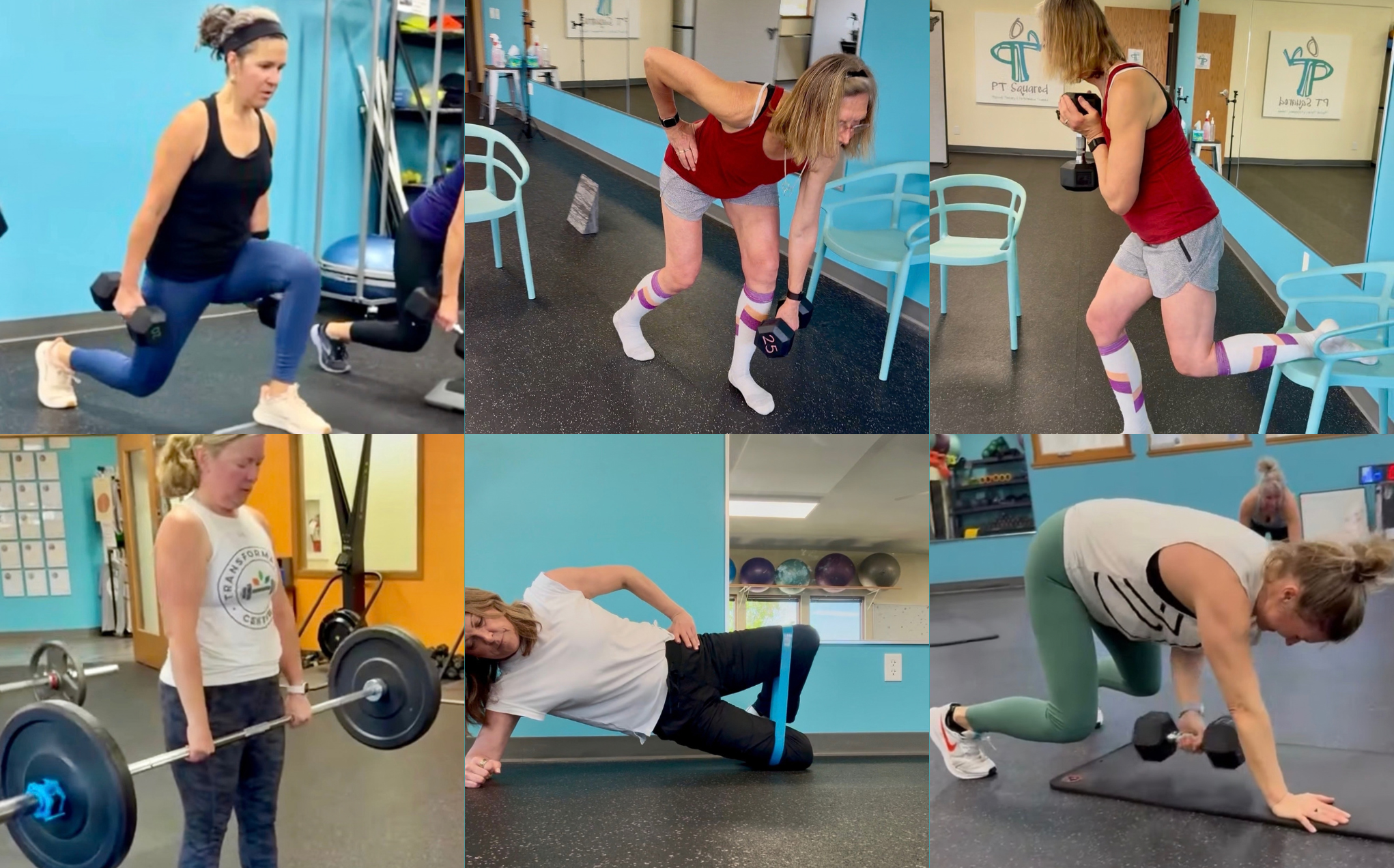
Prioritize resistance training. If strength training isn’t currently part of your routine, midlife is an excellent time to start. If you’re already training and something begins to hurt, you don’t necessarily need to stop. Adjusting weight, volume, frequency, range of motion or exercise selection may allow you to keep moving while gradually rebuilding capacity.
Eat to support muscle and recovery. Adequate nutrition, particularly adequate protein, helps provide the raw materials your body needs to maintain muscle and recover from exercise. Calcium, vitamin D and overall nutrient intake are also important considerations for musculoskeletal health.
Give recovery some attention. Sleep, stress and total life load matter. Exercise provides the stimulus, but your body needs an environment that allows it to adapt to that stimulus. Sometimes the answer isn’t another exercise. Sometimes better support is part of the intervention.
Consider your hormonal health, too. For some women, this may be an appropriate time to talk with a qualified healthcare provider about menopause symptoms and whether menopausal hormone therapy (MHT/HRT) is appropriate for you.
Hormone therapy has established benefits including prevention of bone loss and fracture, but we don’t currently have strong enough evidence to say that HRT treats a particular tendon injury, frozen shoulder or other specific musculoskeletal condition. Those are interesting areas of emerging research rather than established treatment recommendations.
So I’m not suggesting:
“My shoulder hurts. I need estrogen.”
I’m suggesting:
“My hormonal health is one component of my overall health, and perhaps it deserves a place in the conversation.”
Your body is still adaptable
One of the most frustrating things I hear from active women in midlife is some version of:
“I haven’t changed anything. Why can’t my body handle this anymore?”
And maybe that’s part of the answer.
You haven’t changed anything, but your physiology may have changed.
The training program that worked five years ago may require a little more recovery now. The strength you’ve always relied on may need more intentional maintenance. Your nutrition may deserve more attention. An increase in activity may need to happen more gradually.
None of that means your best physical years are behind you.
It means we adjust.
We calm irritated tissues when necessary. We progressively load them to build capacity. And we support the biological environment that allows healing and adaptation to occur.
Your body at 45, 50, 55 and beyond is still capable of becoming stronger.
Still capable of learning.
Still capable of adapting.
Menopause may change your capacity. It doesn’t take away your capacity to adapt.
Want to learn more about building capacity after injury?
Melissa Roswold, PT, is the owner of PT² Physical Therapy & Performance Training, located inside the Transformation Center, and creator of the Love + Load™ Framework for injury recovery.
Follow @melissaptsquared on Instagram for more about using the right mix of Love, Load and Support to calm symptoms, rebuild capacity and help your body adapt.
References
Wright VJ, Schwartzman JD, Itinoche R, Wittstein J. The musculoskeletal syndrome of menopause. Climacteric. 2024;27(5):466–472.
Musculoskeletal Manifestations of Perimenopause: A Systematic Review and Meta-Analysis of 93,021 Women.
International Menopause Society. Recommendations and key messages on women’s midlife health and menopause. Climacteric. 2025.
Recent Comments