
By Erin Tallard, CPT, PPSC, Nutrition Coach
Walk down the supplement aisle, or worse, scroll supplement ads for five minutes, and you’d think it’s impossible to have a good workout without a neon tub of something.
Let’s clear that up right away: you can train hard, get stronger, and change your body composition without a single supplement. We watch people do it at The Transformation Center every week.
But here’s the other half, and that’s why this blog exists…
Some of it works and when you understand what each thing actually does, you can decide whether it earns a spot in your routine instead of guessing based on whoever yelled loudest on Instagram.
In our last piece, Performance Nutrition vs. Weight Loss Nutrition: Two Different Sides of the Same Coin, we covered how to fuel before and after training with actual food. Consider this Part 3: what to layer on top, if anything, once the food is handled.
These supplements take a back seat to the foundational blocks of protein, sleep, consistent strength training, fiber, daily movement, hydration and internal work. If those aren’t in place, no powder is saving your workout.
Caffeine: The Most Proven Performance Supplement There Is
Let’s start with the one most of you are already taking, possibly right now. *sips coffee*
Caffeine is the most researched performance aid on the planet, and it genuinely works.
It reduces your perception of effort, improves focus, and gives a measurable boost to both strength and endurance performance. Your morning coffee before the gym is an outstanding pre-workout.
The research typically uses doses around 3 to 6 milligrams per kilogram of bodyweight, taken about 30 to 60 minutes before training. Here’s what that means in real numbers, because this is where body size matters a lot:
For a 150-pound person, that range is roughly 200 to 400 mg. For a 200-pound person, it’s roughly 270 to 550 mg.
Now, before anyone runs off to triple their intake: those are research doses used with athletes, and the FDA considers about 400 mg per day the general safe ceiling for healthy adults. A regular cup of coffee runs 90 to 100 mg. Many pre-workout scoops pack 200 to 300 mg in one hit. So it adds up faster than people think, especially if you’ve already had coffee that morning.
Please start low. A single coffee or a half scoop before training is plenty for most people to feel a difference. More is not automatically better, and past a point it’s just jitters, a racing heart, and a rough afternoon.
How to know caffeine is wrong for you (or your dose is): if you’re crashing hard after workouts or hitting extreme energy lows later in the day, if your sleep is suffering, or if you feel anxious and wired instead of focused, that’s your answer.
Caffeine has a half-life of roughly 5 to 6 hours, which means half of that 2 p.m. scoop is still in your system at 7 or 8 at night. If you train in the afternoon or evening, caffeine is probably working against you, and that’s exactly who non-stim options were made for… or those, like me, who really love their coffee but want the benefits of the additional ingredients. More on that in a minute.
Another important note: if you have high blood pressure, a heart condition, anxiety, or you’re pregnant or managing any medical condition, talk with your physician before using caffeine as a training tool, and especially before touching concentrated pre-workout products. We are never advising something you know your body doesn’t handle. You know it best. Caffeine raises heart rate and blood pressure, and with our membership spanning 40 to 70-plus, plenty of folks are on medications that don’t mix well with stimulants. Ask first. It’s a five-minute conversation.
Pre-workout Supplements vs. Plain Coffee
So if coffee works, why does anyone buy pre-workout?
Fair question. The answer is that a good pre-workout isn’t just caffeine. It’s caffeine plus other ingredients that coffee doesn’t have, things that support blood flow, muscular endurance, and focus. Whether those extras are worth it to you depends on how hard and how often you’re training.
A quick thought on energy drinks, since they’ve become the accidental pre-workout for a lot of people: if you go that route, skip the high-sugar ones. A can with 40+ grams of sugar gives you a spike and a crash, which is the opposite of what you want mid-workout. Sugar-free versions at least avoid that problem, but you’re mostly paying energy-drink prices for caffeine you could get from coffee.
If you’re going to spend money on a pre-workout, here’s what to actually look for on the label.
The Ingredients That Matter and What They Actually Do
Whatever brand you choose is totally up to you. What matters is the ingredient list, the doses, and whether the company third-party tests their products, meaning an independent lab verifies what’s on the label is what’s in the tub. Look for certifications like NSF Certified for Sport or Informed Sport. The supplement industry is barely regulated, so third-party testing is the closest thing you have to a guarantee.
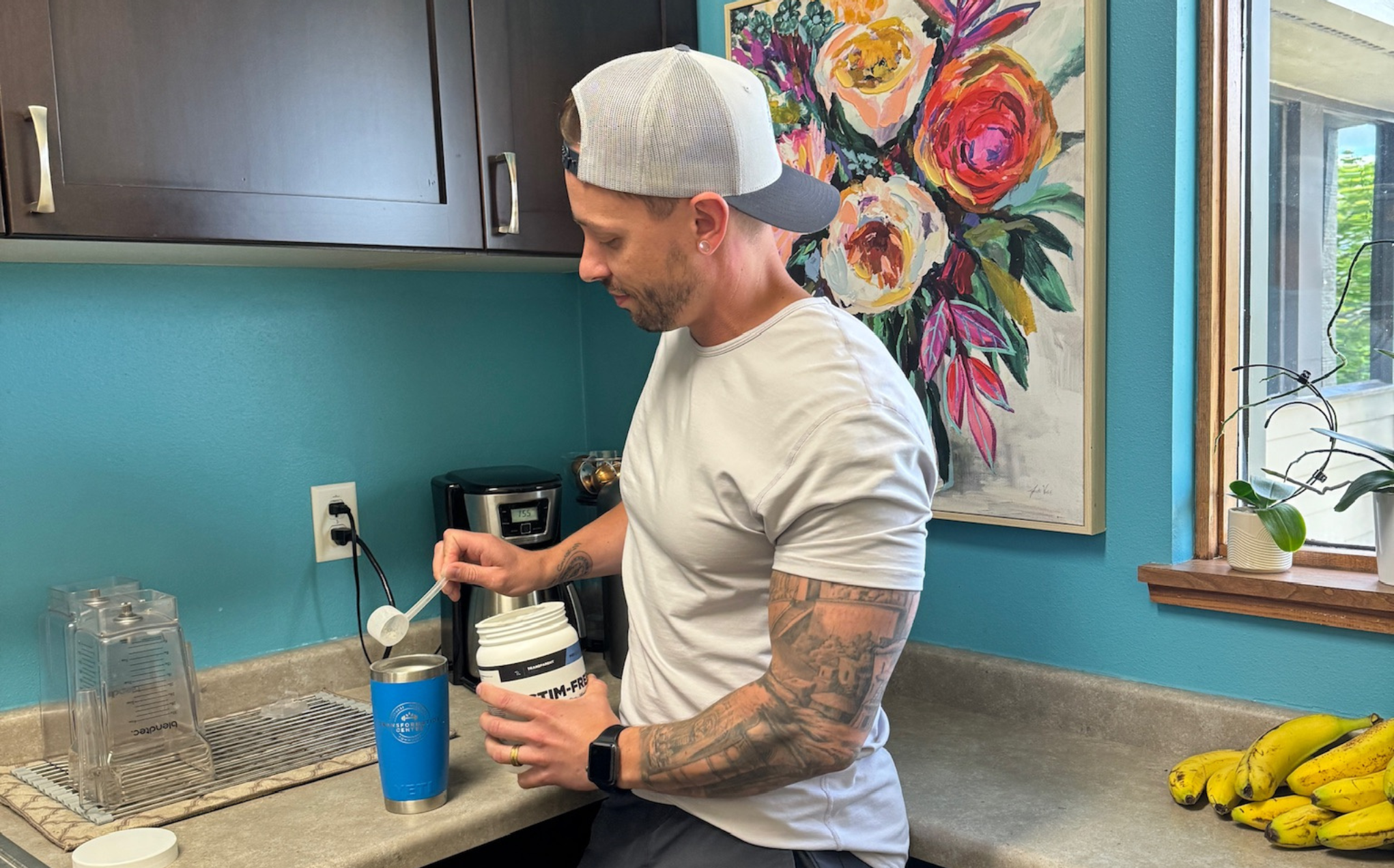
Coach Notet: my personal go-to is Transparent Labs, specifically their non-stim option, and I’ve used a few other brands that work similarly. Nobody’s paying me to say that. I like them because the doses match the research and everything is third-party tested. But the brand is less important than knowing what you’re looking at:
Citrulline malate is the pump ingredient. It’s a vasodilator, meaning it helps open up your blood vessels, which improves blood flow to working muscles. That’s where the “pump” feeling comes from, and it’s not just cosmetic. Better blood flow means better nutrient and oxygen delivery during your sets. Research doses are around 6 to 8 grams, so if a product lists 2 grams, they’re sprinkling it in for the label.
Beta-alanine works completely differently, and this one gets misunderstood. It’s not a same-day ingredient. It builds up in your muscles over weeks of consistent use and acts as a buffer against the burn you feel during high-rep sets, letting you squeeze out a little more work before fatigue. The tingly, itchy feeling some people get from it? Totally harmless. It’s called paresthesia, it passes in about 30 minutes, and it does not mean the product is “working” right then. Effective doses are around 3 to 6 grams daily.
L-tyrosine supports focus and mental sharpness, particularly under stress or fatigue. It’s a precursor to dopamine and norepinephrine, the brain chemicals involved in drive and attention. This is a big part of why a good non-stim can still make you feel locked in without any caffeine.
Taurine plays a supporting role in muscle function, hydration at the cellular level, and possibly reducing exercise-induced soreness. Not a star, but a solid role player.
Put those together and you get why non-stim pre-workouts exist: you can get the pump, the endurance, and the focus without the jitters, the racing heart, or the ruined sleep. If you’re caffeine sensitive, train in the evening, or you’ve noticed those post-workout crashes we talked about, a non-stim is genuinely worth a try. If you’re a morning trainer who loves coffee and feels great, you may not need any of it.
Create the Ritual
One more benefit that doesn’t show up on the label, and we mean this seriously: psychology.
Mixing your pre-workout, or making your coffee, or having your little pre-gym snack, becomes a cue. It tells your brain the workout is happening. On the days motivation is low, that small ritual can be the difference between talking yourself out of it and finding yourself warming up anyway. This isn’t placebo, although that’s pretty interesting too, its habit science because rituals lower the activation energy of hard things.
Just make sure the ritual serves you, not the other way around. The moment you can’t train without it, the tool has become a crutch.
Intra-workout Fuel and BCAAs
Some lifters and plenty of books recommend sipping carbs or amino acids during your workout.
Here’s our honest breakdown.
Intra-workout carbs can help if your sessions are long (think 90-plus minutes), brutally hard, or you’re training multiple times a day. For a typical 45-to-60-minute session? Your pre-workout fueling already covered it. It’s not wrong, it’s just usually unnecessary.
BCAAs, branched-chain amino acids, deserve their own note because the marketing has been relentless for at least a decade or two. BCAAs are three specific amino acids (leucine, isoleucine, valine) that your muscles use for repair and growth. The claim is that sipping them protects muscle and boosts recovery.
The problem is however, if you’re eating enough protein, you’re already getting plenty of BCAAs, because they’re in the protein you eat. Whole protein sources also deliver all the other amino acids your muscles need to actually build tissue, which BCAAs alone don’t. The research is pretty clear at this point that for anyone hitting their daily protein target, BCAA supplements are mostly expensive flavored water.
Instead, put that money toward high quality food or a protein powder.
Carb Loading: Fueling Up Before the Big Stuff
Now let’s talk about the food-based performance strategy that predates every tub on the shelf.
In the last blog we covered the pre-workout snack, quick carbs an hour or two before training. Carb loading is that same idea, zoomed out. When you have a genuinely big demand coming, a strength testing day, a long-duration hike, a triathlon, a competition, a tournament weekend, you can start stocking your glycogen stores the night before or even a few days out.
Remember the wallet-and-savings analogy: glycogen is your quick-access cash. Carb loading is making sure the wallet is completely full before a big spending day.
Here’s the simple version of how the carb types fit together:
Days before: lean on complex carbohydrates, oatmeal, rice, potatoes, whole grains, beans, fruit, spread across your meals. These digest steadily and top off your muscle glycogen over time. This is where the classic spaghetti dinner before the big game actually comes from, let’s bring that back!
Day of, in the hours before: shift toward the simpler, faster-digesting carbs we covered last time. Bread, cereal, bananas, even the more processed stuff. The tank is already full from the days prior; now you’re just topping it off with fuel you can access quickly.
During, if it’s long: this is where intra-workout carbs earn their keep, for events over 90 minutes or so.
Days after: back to complex carbs, paired with protein, to refill what you spent and support recovery. Big efforts can take a day or two to fully restock, and eating like the event is still happening for one more day is a mistake in the other direction. Match the fuel to the demand, in both directions.
One important distinction before anyone conflates two similar-sounding terms: carb loading is a short-term strategy around a specific event. Carb cycling is a different animal, an ongoing structure where your carb intake varies across the week based on training days versus rest days. It can be a useful tool, especially for people balancing performance and body composition goals, but it’s a genuine deep dive with a lot of nuance about who it’s right for. That one deserves its own blog, and it’s on the list.
And the reality check, same as last time: someone training three days a week for general health does not need to carb load for Tuesday’s session. This strategy is for genuinely big demands. For everyday training, the pre-workout snack and post-workout meal from the last blog are the whole playbook.
Key Points
Supplements are optional. Food, water, protein, and sleep come first, and no powder replaces them.
Caffeine genuinely works, but dose by your body size, start low, and watch for crashes, poor sleep, and anxiety as signs to back off.
If you have high blood pressure, a heart condition, or take medications, talk to your physician before using caffeine or pre-workout products.
Non-stim pre-workouts (citrulline malate, beta-alanine, l-tyrosine, taurine) can deliver pump, endurance, and focus without the jitters, worth a try if you’re caffeine sensitive or train later in the day.
Whatever brand you buy, check the doses against the research and look for third-party testing.
BCAAs are generally not worth the money if your daily protein is covered.
Carb loading is real and useful for genuinely big efforts. For regular training, your pre- and post-workout fueling has it handled.
Where Does Coaching Come In?
The thing about everything above…
The right answer is different for a 45-year-old training four days a week, a 62-year-old rebuilding strength, and someone prepping for their first long hike or competition. The research gives us ranges.
Figuring out where you land in those ranges, and building it into a plan you’ll actually follow, asses, and modify with progress is the part that goes far beyond this type of general recommendations.
That’s exactly what I do in one-on-one coaching here at The Transformation Center, personalized training and nutrition built around your goals, your schedule, and your actual life. If you’ve been wanting a plan that’s yours instead of a template, go to our website page and inquire about coaching with Erin. We’ll assess where you’re at and figure out together whether it’s the right fit or if one of our other programs would work better.
Reminder:
This article is educational and isn’t medical or individualized nutrition advice. Supplements and caffeine can interact with medications and health conditions. Before adding anything new, especially stimulants, talk with your physician, and consider a registered dietitian for individualized nutrition guidance.
References
Guest NS, et al. International Society of Sports Nutrition position stand: caffeine and exercise performance. Journal of the International Society of Sports Nutrition. 2021.
Trexler ET, et al. International Society of Sports Nutrition position stand: beta-alanine. Journal of the International Society of Sports Nutrition. 2015.
Gonzalez AM, Trexler ET. Effects of citrulline supplementation on exercise performance in humans. Journal of Strength and Conditioning Research. 2020.
Wolfe RR. Branched-chain amino acids and muscle protein synthesis in humans: myth or reality? Journal of the International Society of Sports Nutrition. 2017.
Kerksick CM, et al. International Society of Sports Nutrition position stand: nutrient timing. Journal of the International Society of Sports Nutrition. 2017.
Burke LM, et al. Carbohydrates for training and competition. Journal of Sports Sciences. 2011.
U.S. Food and Drug Administration. Spilling the Beans: How Much Caffeine is Too Much? (Consumer education resource.)
Recent Comments